The first 5 steps to buying a house in Topeka are to check your finances, get pre-approved, find a local agent, search within your real budget, and make an offer backed by real numbers, in that order. Skipping ahead is where most buyers get stuck.



Down payment assistance is extra money, usually a second loan or a grant, that helps Topeka buyers cover their down payment and closing costs so they don't need as much cash saved up front.
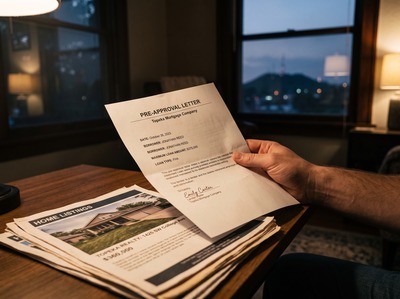
Pre-qualification is a quick, informal estimate of what you might be able to borrow. Pre-approval is a lender's written statement of how much they're willing to lend you, based on your verified credit and income, and it's the one that carries weight when you make an offer on a house in Topeka.

Planning to Buy a Home Next Spring? Here's Why Fall Is When the Real Work Starts
If you're picturing yourself moving into a new home in Topeka next spring, it's tempting to think you've got plenty of time. Spring feels far away in September.
It isn't, though. Not for the parts of buying a home that actually take time to fix.
Your credit score and your down payment aren't things you can improve overnight. They respond to months of steady habits, not a few weeks of scrambling right before you want to make an offer. If spring is your real target, fall is when the groundwork needs to start.
Why Credit Takes Months, Not Weeks
A lot of buyers assume credit is something you check once, right before you talk to a lender. In reality, your score is a rolling average of your financial behavior, and it moves slowly by design.
Paying off a credit card balance today doesn't instantly erase months of high utilization. Disputing an error on your report can take 30 to 45 days to resolve, sometimes longer. And if you have any late payments or collections to work through, rebuilding a track record of on-time payments simply takes time passing, not a clever trick.
That's the whole case for starting now. Give yourself six months instead of six weeks, and you have room for your actual habits to show up on paper before a lender ever pulls your file.
Start With Your Credit Report, Not Your Score
Before you worry about raising a number, find out what's actually on your credit report. You're entitled to a free copy from each of the three major bureaus once a year at annualcreditreport.com, which is the only site required by federal law to provide the free version.
Go through it line by line and look for:
- Accounts you don't recognize, which could signal an error or identity theft
- Old debts that should have fallen off but haven't
- Balances that are higher than what you remember
- Late payments, especially anything recent
If you find something wrong, dispute it directly with the bureau reporting it. Errors get fixed more often than people expect, but only if someone actually flags them.
The Habits That Move Your Score Between Now and Spring
Once you know what your report actually says, a handful of habits do most of the real work over the next several months.
Pay every bill on time, every time. Payment history is the single biggest factor in most credit scoring models. One missed payment can undo months of otherwise good progress, so this is the habit worth protecting above all others.
Bring down your credit card balances. Credit utilization, how much of your available credit you're actually using, matters more than most people realize. Getting balances down, even before you pay them off completely, tends to move your score faster than almost anything else you can do.
Don't open new credit accounts right now. That new store card with 20 percent off your purchase, or the offer for a new car loan, both trigger a hard inquiry and a new account, which can temporarily lower your score right when you don't want it to move. Save the shopping spree for after closing.
Don't close old accounts either. It feels like tidying up, but closing a long-held card can shorten your average credit history and reduce your available credit at the same time, both of which can work against you.
For a closer look at what's on your credit report and how scoring actually works, see our credit score guide.
Building Your Down Payment on a Fall-to-Spring Timeline
Credit and down payment savings run on parallel tracks, and fall gives you the same runway advantage for both.
A few practical moves that work well on a six-month timeline:
- Open a dedicated savings account just for the down payment, separate from your everyday checking, so it's harder to dip into without noticing
- Set up an automatic transfer on payday, even a modest one, so saving happens before you have a chance to spend it
- Take a hard look at recurring subscriptions and expenses you can pause for a few months
- If a holiday bonus or tax refund is coming, decide now that it's earmarked for the house fund before it lands in your account
It's also worth asking a lender about down payment assistance programs available to Kansas buyers. Eligibility and terms shift depending on the program and your specific situation, so this is general information rather than a guarantee, and a loan officer can tell you what you actually qualify for.
Why Lenders Care About Both Numbers Together
Your credit score and your down payment aren't evaluated separately. A lender looks at the whole picture, including your score, your available cash, and your debt-to-income ratio, to decide not just whether you qualify for a loan, but what interest rate and terms you'll actually get offered.
A stronger credit score paired with a solid down payment can mean a meaningfully better rate over the life of the loan. That's a general lending principle, not a promise about your specific numbers, and the details depend on the lender and the loan program. A conversation with a local lender now, even before you're ready to buy, can tell you exactly where you stand and what would move the needle most for your situation.
What This Looks Like on a Calendar
If spring is the goal, a rough six-month runway starting now might look like this:
- Now through October: Pull your credit reports, dispute any errors, and open a dedicated savings account
- November and December: Keep balances low, pay everything on time, automate your savings, and resist new credit accounts through the holidays
- January and February: Talk to a lender about pre-approval and see where your score and savings actually stand. This is also a good time to learn the difference between pre-qualification and pre-approval
- March and beyond: Start the active home search once you know your real numbers
None of this has to be perfect. The point isn't hitting an exact score or an exact savings figure by a specific date. It's giving your habits enough time to actually show up in your financial picture before you need them to.
Where Team Ringgold Fits In
None of this replaces a conversation with a lender, who can look at your actual numbers and tell you where you stand. But once you've got a handle on your credit and your savings, an agent who works with Topeka buyers regularly can help you figure out what that translates to in terms of neighborhoods, price ranges,
How to Know If You're Actually Ready to Buy a Home in Topeka
Every year, a wave of people in Topeka decide it's finally time to stop renting and buy a house. Some of them are ready. Some of them aren't, and they find that out the hard way, three months into a search that never should have started yet.
If you're wondering whether you're actually ready to buy a home in Topeka, the answer isn't just "do I have a down payment saved." It's a handful of questions, and most of them have nothing to do with money.
Your Finances Need to Be Steady, Not Perfect
You don't need a flawless financial picture to buy a house. You need a stable one.
Lenders care about consistency more than raw numbers. A steady job history, even at a modest income, usually looks better to a lender than a recent jump to a higher-paying job with no track record yet.
The same goes for debt. It's not just about how much you owe. It's about how much of your monthly income is already spoken for before a mortgage payment even enters the picture. This is usually described as your debt-to-income ratio, and it's one of the first things a lender will look at.
If you're not sure where you stand, this is a good moment to talk to a lender before you talk to anyone else. A pre-approval conversation costs you nothing and tells you a lot.
You Should Know How Long You Plan to Stay
This one gets skipped constantly, and it shouldn't.
Buying a home comes with real transaction costs on both ends, when you buy and when you eventually sell. If you think there's a real chance you'll move again in a year or two, renting might actually serve you better right now.
Most people start to come out ahead financially somewhere in the three-to-five-year range of owning a home, though that depends a lot on the local market and what you paid to get in. If your Topeka job or your life plans are genuinely uncertain over that stretch, it's worth sitting with that before you start touring houses.
Timing in Topeka Isn't Just About the Calendar, But It Matters
Topeka's housing market moves with some predictable seasonal rhythm, like most mid-sized Midwest markets do.
Spring and early summer tend to bring more homes onto the market, which means more choices but also more competition. Buyers with school-age kids often push to close over the summer so they're settled before the school year starts, which adds its own pressure to that window.
Winter tends to be quieter. Fewer homes list, but the buyers who are out looking are usually serious, and sellers who list in January or February often have a real reason to sell rather than just testing the market.
Neither season is objectively "better." What matters is whether the trade-offs of that season line up with your situation.
Ask Yourself These Questions Honestly
Before you start scheduling showings, sit with a few honest questions:
Do you know what your monthly payment would actually look like, not just the number a mortgage calculator spits out, but with taxes, insurance, and maintenance factored in?
Do you have savings left over after the down payment and closing costs, or would buying a house wipe out your entire cushion?
Are you buying because you're ready, or because it feels like something you're supposed to be doing by now?
There's no wrong answer to any of these. But answering them honestly now saves you from a much harder conversation with yourself six months into a house search.
When You're Ready, the Process Gets a Lot Easier
Once your finances are steady and you've thought through timing, the actual process of buying a home in Topeka is very learnable. It's not mysterious. It just has a lot of small, sequential steps, and most of the stress people feel comes from doing them out of order.
This is usually where a good buyer's agent earns their keep, not by unlocking some secret, but by keeping you from making an offer before you're pre-approved, or falling in love with a house before you've seen three comparable ones, or missing a deadline in the contract because nobody told you it existed.
Team Ringgold works with buyers across Topeka and Shawnee County at every stage of this process, from people who are still six months out from being ready to people who are ready to make an offer this week. If you're trying to figure out where you actually stand, that's a conversation worth having before you start touring homes, not after.
If you're ready to talk through your specific situation, reach out to Team Ringgold any time. No pressure, no obligation, just a straight answer about where you stand.

A few years back, a lot of first-time buyers in Topeka bought a starter home, something small enough to actually afford, and figured they'd grow into something bigger down the road.
That road is showing up now, all across Topeka and Shawnee County.
We're hearing from more and more move-up buyers lately, people who bought their starter home around 2019 or 2020, back when rates were low, and were just trying to get their foot in the door. Now their careers have moved forward, maybe their family has grown, and the house that felt perfect a few years ago feels tight. Not bad, just tight.
A move-up buyer is simply someone selling the home they own to buy something bigger or better suited to where they are now. If that sounds familiar, you're dealing with a different set of questions than a first-time buyer ever had to think about.
What makes a move-up different from a first-time purchase
The first time you bought a house, the main question was probably "can I afford this and qualify for a loan." This time around, the math is more layered, because you're not just buying. You're selling too.
That means figuring out things like:
- How much equity you've actually built in your current home
- Whether you sell first and then buy, or buy first and then sell
- How to time two closings so you're not homeless for a month or paying two mortgages
- What your current home is realistically worth in today's market, not what you assume it's worth
None of these are impossible problems. They're just problems a first-time buyer never had to solve, because there was no home to sell on the other end.
The equity question: you might have more room than you think
Here's the part a lot of move-up buyers underestimate. If you bought in 2019 or 2020, chances are your home has appreciated since then, and you've also been paying down principal for a few years. Combine those two things and you may have built up more equity than you'd guess just from looking at your monthly mortgage statement.
That equity is what funds your next down payment. It's worth getting an actual number instead of guessing, because it changes what "moving up" even looks like for you. Find out what your home is worth.
Selling and buying at the same time is a coordination problem, not a money problem
This is usually the part that stresses people out the most, and honestly, it's the part where having someone manage the timeline for you earns its keep.
You don't want your old house to sell and close before you have somewhere to go. You also don't want to be carrying two mortgages for three months because your new house closed early. Getting both transactions to line up, especially in a market where showings, offers, and closings all move at their own pace, takes some coordination.
This is a normal part of the process for an agent who does move-up transactions regularly here in Shawnee County. It's less about knowing a secret trick and more about having done the sequencing enough times to see the timing problems coming before they happen.
What to actually do first
If this is you, the first real step isn't listing your house. It's figuring out where you actually stand.
That usually means:
- Getting a realistic read on what your current home would sell for in today's Topeka market
- Getting pre-approved for what you could afford on the next home, using that equity as part of the picture
- Deciding, based on your situation, whether you want to sell first, buy first, or try to time them together
Once you know those three things, the rest of the process gets a lot less abstract.
The bottom line
Your first house was never supposed to be your last house. It was supposed to get you started, and if it did its job, you've probably built more equity than you realize sitting in it right now.
We're seeing this exact situation play out with buyers from that 2019 and 2020 wave more and more this year, people who bought smart the first time and are simply ready for the next stage. If that's you, the smartest first move is figuring out what your current home is worth and what you can actually afford next, before you make any decisions.
If you bought your starter home a few years back and you're wondering whether now's the time to move up, talk to a Team Ringgold buyer's agent. We work with move-up buyers across Topeka and Shawnee County regularly, and a quick conversation costs you nothing. Reach out and let's figure out where you stand.
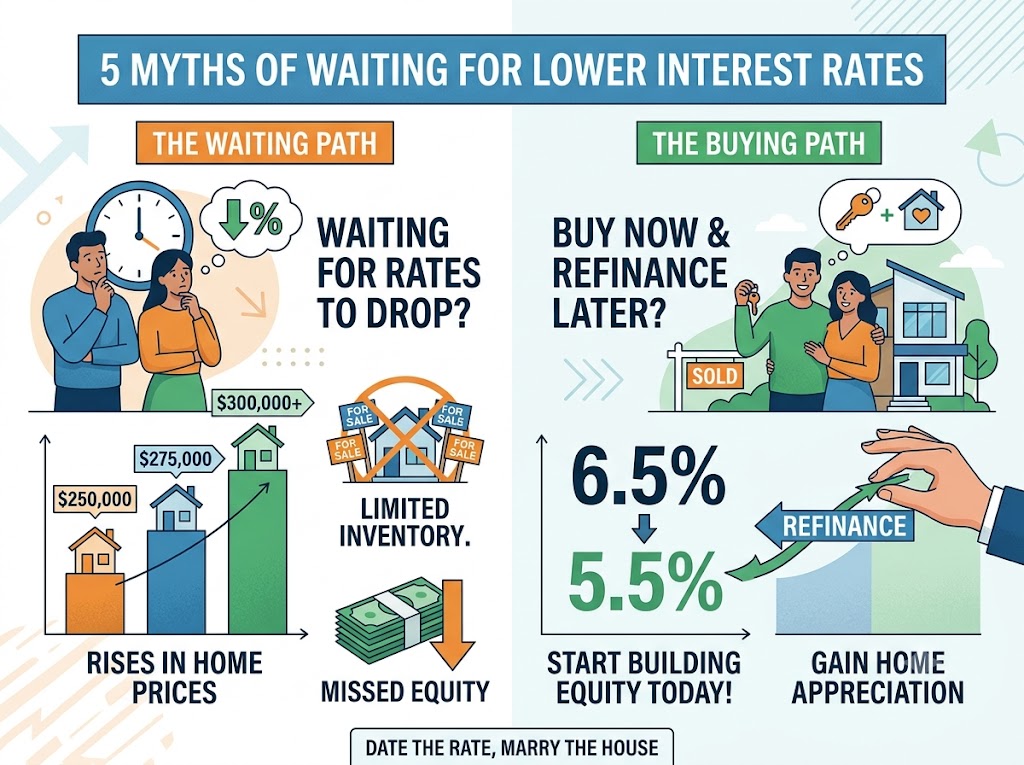
Thinking about waiting for mortgage rates to drop before you buy? For most buyers, waiting has cost more than buying sooner would have. Here are five common myths about waiting, and what the data says about each one.
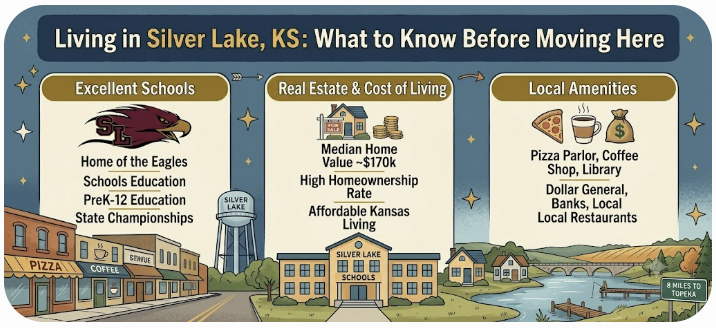
Living in Silver Lake, KS means small-town life about 15 minutes northwest of downtown Topeka, a one-school-district community built around Silver Lake USD 372, and a housing market where inventory is scarce and well-priced homes rarely last long. With a population of roughly 1,400, Silver Lake is one of the most requested small communities in Shawnee County, and the school district is the reason most buyers ask about it by name.
Team Ringgold at Keller Williams One Legacy Partners has helped hundreds of buyers and sellers across Shawnee County, including the Silver Lake area. Here is what you need to know before making your move.
To explore active listings, browse homes for sale in Silver Lake or contact Team Ringgold for local insight before you make a move.
Is Silver Lake, KS a Good Place to Live?
Silver Lake is a good fit for buyers who want a small, tight-knit town with a highly regarded school district and a short drive to Topeka jobs and amenities. The town sits along US-24 just north of the Kansas River, close enough to the capital city that most errands and commutes take 15 to 20 minutes, but far enough out to keep its own identity, its own schools, and a quieter pace.
The trade-off is selection. Silver Lake has no big-box retail, limited dining, and a small housing inventory. Buyers who want restaurants, shopping, and a wide range of listings to choose from will find more options in Topeka. For a side-by-side look at the bigger market, see our guide to living in Topeka, KS.
What School District Serves Silver Lake, KS?
Silver Lake is served by Silver Lake USD 372, a single-town district with one elementary school and one junior/senior high school. The district is the biggest driver of housing demand in the community. Small class sizes, strong academics, and one of the most storied small-school athletic traditions in Kansas, led for decades by the Silver Lake Eagles football program, keep the district in demand year after year.
Because the district is small, attendance is straightforward compared to Topeka, where four districts split the city. Still, properties on the edges of town and rural parcels nearby can fall into neighboring districts, so verify the district boundary for any specific property before making an offer. Team Ringgold checks this on every showing.
How Much Does a Home in Silver Lake, KS Cost?
Homes in Silver Lake typically sell in the low to mid $200,000s, with updated homes and newer construction reaching into the $300,000s and rural acreage properties running higher. Kansas is a non-disclosure state, so accurate sale prices come from the MLS rather than public websites, and in a market this small even a few sales can swing the published averages. That is one more reason to lean on local MLS data here.
The defining feature of the Silver Lake market is scarcity. Only a handful of homes are typically active at any given time, and demand from buyers targeting the school district means well-priced listings often go under contract within days. Buyers should be pre-approved and ready to move quickly, and sellers benefit from a market where prepared homes regularly draw strong offers.
Carrying cost example: a $225,000 home with 20% down on a 30-year fixed mortgage at 6.3% runs about $1,115 per month in principal and interest, before property taxes and insurance.
What Is the Commute Like from Silver Lake?
Silver Lake sits on US-24, which runs straight into north Topeka. Typical drive times include downtown Topeka (about 15 minutes), the Stormont Vail and University of Kansas Health System St. Francis hospital corridor (15 to 20 minutes), west Topeka retail along Wanamaker Road (about 20 minutes via US-75 or I-70), and Rossville (about 5 minutes west). Lawrence is roughly 40 minutes and the Kansas City metro about 75 to 90 minutes.
For most residents the commute is the whole point: Topeka paychecks and amenities with small-town housing and schools.
What Is There to Do in Silver Lake, KS?
Silver Lake keeps things simple. The town has its namesake lake, an oxbow of the Kansas River, along with a city park, ball fields, and community events that revolve around the school calendar. Friday nights in the fall belong to Eagles football, and school activities double as the town's social calendar.
Bigger entertainment is a short drive away. Prairie Band Casino and Resort is about 20 minutes north in Mayetta, and everything Topeka offers, from Lake Shawnee and Gage Park to the NOTO Arts and Entertainment District and downtown dining, is within 15 to 25 minutes.
Who Should Consider Moving to Silver Lake, KS?
Silver Lake fits buyers prioritizing a small school district, small-town community life, and a quick commute to Topeka. It also appeals to buyers looking for acreage and outbuildings within a short drive of city employment. Buyers who want walkability to restaurants and retail, a deep inventory of homes to tour, or new construction options at scale will be better served inside Topeka.
Because inventory is so limited, the best way to buy in Silver Lake is to get set up on an MLS alert before the right home hits the market. For local insight on Silver Lake or a personalized home search, contact Team Ringgold at Keller Williams One Legacy Partners.
Frequently Asked Questions About Living in Silver Lake, KS
1. How far is Silver Lake from Topeka?
Silver Lake is about 15 minutes northwest of downtown Topeka via US-24. Most Topeka destinations, including the hospital corridor and west-side retail, are within a 15 to 25 minute drive.
2. What school district serves Silver Lake, KS?
Silver Lake is served by Silver Lake USD 372, a single-town district with one elementary school and one junior/senior high school, known for small class sizes, strong academics, and a standout athletic tradition.
3. How much does a home in Silver Lake, KS cost?
Homes in Silver Lake typically sell in the low to mid $200,000s, with updated and newer homes reaching the $300,000s and rural acreage properties higher. Inventory is very limited, so prices vary with each listing.
4. Is Silver Lake, KS a buyer's or seller's market?
Silver Lake favors sellers. Inventory is consistently scarce, demand for the school district is steady, and well-priced homes often go under contract within days of listing.
5. What is there to do in Silver Lake, Kansas?
Silver Lake offers its namesake lake, a city park, and a community calendar centered on school activities and Eagles athletics. Prairie Band Casino is about 20 minutes north, and all of Topeka's attractions are within a 15 to 25 minute drive.
6. Why is housing inventory so low in Silver Lake, KS?
Silver Lake is a small town of roughly 1,400 people with steady demand driven by its school district, so few homes come to market and turnover is low. Buyers often set up MLS alerts to be notified the moment a home lists.

Living in Topeka, KS means a median home sale price around $215,000, an average commute under 20 minutes, and a cost of living well below the national average. As the capital of Kansas, Topeka offers stable government and healthcare employment, four established school districts, and big-city amenities like Lake Shawnee and the Topeka Zoo without big-city prices. With a population of about 125,000, it is one of the most affordable mid-sized cities in the Midwest.
Team Ringgold at Keller Williams One Legacy Partners has helped hundreds of buyers and sellers navigate the Topeka real estate market. Here is what you need to know before making your move.
To explore active listings in this community, browse homes for sale in Topeka or contact Team Ringgold for local insight before you make a move.
Is Topeka, KS a Good Place to Live?
Topeka is a good fit for buyers who want affordability, short commutes, and a strong sense of community. Most homes here cost a fraction of what you would pay in Kansas City or Johnson County, and the average commute within the city is under 20 minutes. The city combines stable employment anchors, including state government, Stormont Vail Health, The University of Kansas Health System St. Francis, Washburn University, and major employers like Advisors Excel, Security Benefit, Frito-Lay, and Mars, with a recreational footprint built around Lake Shawnee, Gage Park, and an active downtown revival.
Topeka is best for first-time buyers, buyers looking for value, state and healthcare workers, and investors drawn to strong rental demand. Buyers who need walkable urban density or a major airport in their backyard will trade some convenience to live here. Kansas City International is about 75 minutes away.
What Are the Best Neighborhoods in Topeka, KS?
Topeka offers everything from historic districts to new construction, and your budget stretches further here than almost anywhere else in the region.
Southwest Topeka is the most in-demand part of the city. Established subdivisions near Sherwood, Lake Sherwood, and the SW 21st and Urish corridor typically run from the high $200,000s into the $400,000s, with newer construction pushing higher. Most of this area feeds into the Auburn-Washburn school district, which drives steady resale demand.
Westboro and Potwin Place are Topeka's signature historic neighborhoods. Brick streets, mature trees, and character homes from the early 1900s. Pricing varies widely by condition, generally from the $200,000s to over $500,000 for fully updated homes.
College Hill, near Washburn University, offers charming older homes at accessible prices, with steady demand from both owner-occupants and investors.
The Lake Shawnee area on the east side gives buyers larger lots, water access, and Shawnee Heights schools, typically in the $250,000 to $450,000 range.
North Topeka and Oakland are the most affordable entry points, with many homes in the $100,000s. The NOTO Arts and Entertainment District has brought galleries, restaurants, and First Friday foot traffic to North Topeka, making it one of the more interesting value plays in the city.
What School Districts Serve Topeka, KS?
Topeka is served by four public school districts, and the district boundary matters as much as the neighborhood when you are shopping for a home.
Auburn-Washburn USD 437 covers southwest Topeka and is the most frequently requested district among relocating buyers. Washburn Rural High School consistently earns strong academic and activities marks.
Seaman USD 345 serves north Topeka and the communities north of the river, with a loyal, community-centered following.
Shawnee Heights USD 450 covers southeast Topeka and Tecumseh, including much of the Lake Shawnee area.
Topeka Public Schools USD 501 is the largest district, serving central Topeka with Topeka High, Topeka West, and Highland Park, plus magnet and specialty programs.
District lines can split streets, so always verify the exact district and attendance boundary for any specific home before making an offer. Team Ringgold checks this on every showing.
How Much Does a Home in Topeka, KS Cost?
The median home sale price in Shawnee County reached $214,900 in April 2026, up from $192,500 a year earlier. Most buyers shop between roughly $150,000 and $350,000, with new construction and southwest Topeka homes running higher.
Carrying cost example: a $215,000 home with 20% down on a 30-year fixed mortgage at 6.3% runs about $1,065 per month in principal and interest, before property taxes and insurance. That payment is hundreds of dollars below the national norm for a comparable home, which is the core of Topeka's appeal.
The market is fast. Homes sold in April spent a median of just 4 days on the market and sold for 100% of list price, with roughly one month of housing supply. Well-priced homes in Auburn-Washburn and Seaman boundaries routinely draw multiple offers. Buyers should come pre-approved and ready to move quickly. Kansas is a non-disclosure state, so accurate sale price data comes from the MLS, not public websites, which is another reason to work with a local agent.
What Is the Commute Like from Topeka?
Most commutes within Topeka run 15 to 20 minutes, which residents consider one of the city's best perks. I-70, I-470, US-75, and K-4 make it easy to cross town quickly.
For regional commuters, typical drive times include Lawrence (25 to 30 minutes via the Kansas Turnpike), Manhattan (about 55 minutes), the Kansas City metro (60 to 75 minutes), and Kansas City International Airport (about 75 minutes). A meaningful number of residents work in Lawrence or commute to KC a few days a week while keeping Topeka housing costs.
What Are the Best Things to Do in Topeka, KS?
Topeka punches above its weight for a city its size. Lake Shawnee anchors the east side with boating, fishing, trails, the Ted Ensley Gardens, and the spring Tulip Time display. Gage Park is home to the Topeka Zoo, the Kansas Children's Discovery Center, the carousel, and the mini train that generations of Topekans grew up riding.
Downtown has seen real reinvestment, with Evergy Plaza events, the Cyrus Hotel, and a growing restaurant scene along Kansas Avenue. The NOTO Arts and Entertainment District hosts First Friday art walks that draw crowds from across the region. History buffs have the Kansas State Capitol with its dome tour and the Brown v. Board of Education National Historical Park, one of the most significant civil rights sites in the country.
Outdoor options include the Shunga and Landon trail systems, disc golf at Crestview Park, and Washburn Ichabods athletics during the school year.
Is Topeka, KS Growing or Slowing Down?
Topeka's population has held steady around 125,000, but the housing market is anything but flat. Median sale prices climbed more than 11% year over year as of spring 2026, driven by tight inventory and steady demand from first-time buyers, relocating workers, and investors. The Choose Topeka relocation incentive program, which has offered qualifying remote and on-site workers up to $15,000 to move here, has kept national attention on the city as one of the best value relocations in America.
For sellers, roughly one month of supply means well-prepared homes sell quickly and often at or above list price. For buyers, preparation and speed win.
Who Should Consider Moving to Topeka, KS?
Topeka fits buyers prioritizing affordability, short commutes, established school districts, and lake and park access. First-time buyers can often own here for less than rent in many metros. Investors find strong rental demand near Washburn and in North Topeka. State employees, healthcare workers, and remote workers chasing a lower cost of living make up a growing share of new residents.
Buyers who need a daily Johnson County commute or walkable big-city living will find Topeka less convenient, though plenty of residents happily trade that for a mortgage payment half the size.
For local market insight on Topeka or a personalized home search, contact Team Ringgold at Keller Williams One Legacy Partners. The team has helped hundreds of clients buy and sell across Topeka and Shawnee County.
Frequently Asked Questions About Living in Topeka, KS
1. What is the median home price in Topeka, KS?
The median home sale price in the Topeka area is approximately $215,000 as of spring 2026. Prices range from the $100,000s in North Topeka and Oakland to $400,000 and up for newer construction in southwest Topeka.
2. What school districts serve Topeka, KS?
Topeka is served by four districts: Topeka Public Schools USD 501, Auburn-Washburn USD 437, Seaman USD 345, and Shawnee Heights USD 450. Boundaries can split neighborhoods, so verify the district for any specific home before making an offer.
3. How far is Topeka from Kansas City?
Topeka is about 60 to 75 minutes west of the Kansas City metro via I-70, and roughly 75 minutes from Kansas City International Airport. Lawrence is 25 to 30 minutes away via the Kansas Turnpike.
4. Is Topeka, KS a buyer's or seller's market?
As of spring 2026, Topeka is firmly a seller's market. Homes sold in a median of 4 days at 100% of list price in April 2026, with about one month of housing supply.
5. What are the best things to do in Topeka, Kansas?
Popular attractions include Lake Shawnee, Gage Park and the Topeka Zoo, the NOTO Arts and Entertainment District, the Kansas State Capitol, the Brown v. Board of Education National Historical Park, and the Shunga Trail system.
6. What is the cost of living in Topeka, KS?
Topeka's cost of living is well below the national average, driven primarily by housing. A median-priced home with 20% down runs roughly $1,065 per month in principal and interest, which is less than rent in many comparable markets.

2655 SW Wanamaker Rd
Topeka, KS 66614
🥫🍝🥜🌽
Fall Food Drive!


Help us fill the shelves this season!
Every item you give helps put a meal on the table for a neighbor in need.
🎯 Our Goal: Stock the Topeka Rescue Mission with meals for those in need
🥫 What We Need: Non-perishable food: canned goods, pasta, rice, cereal, peanut butter
🤝 How You Can Help: Pledge your donation today!